Bringing Ideas to Life: 3D Printing at Franklin Ellis

Cameron Gregory
28/01/26
~3 Mins


Integrating Printing into Our Workflow
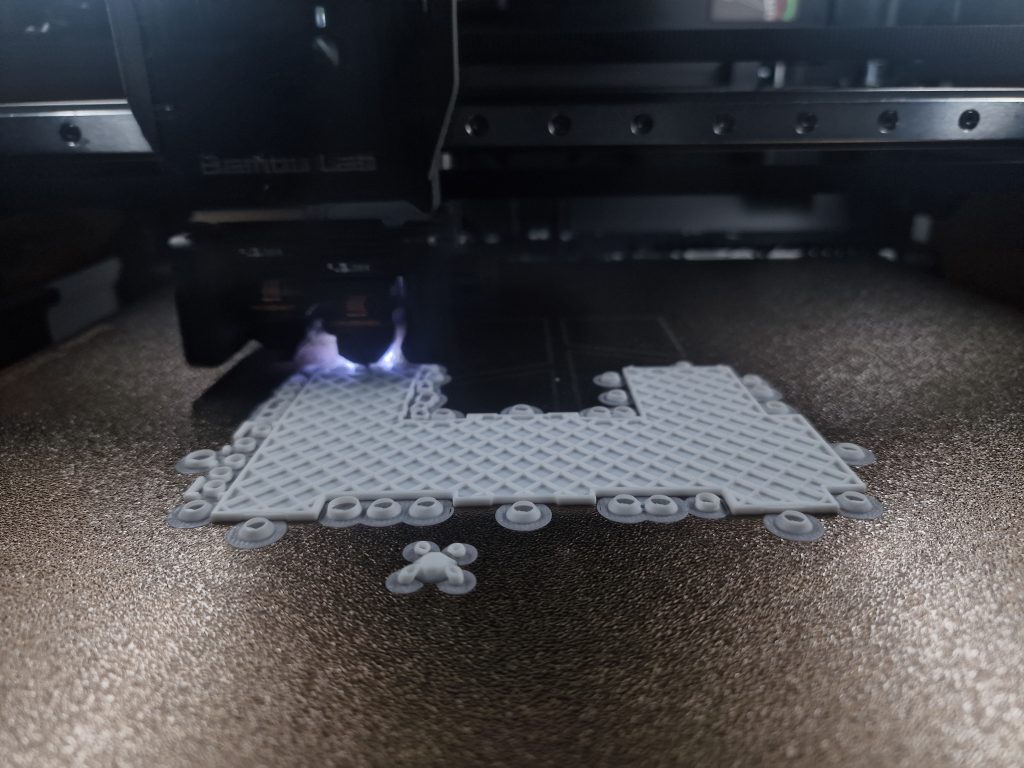
We are actively exploring how 3D printing can sit naturally within our workflow. While it is not yet fully embedded across the office, the ability to take models directly from Revit, prepare them efficiently, and move straight to printing is a significant step forward.This process allows us to produce physical models quickly and with minimal friction. More importantly, it supports clearer design conversations, helping clients and planning teams engage with proposals in a more intuitive and meaningful way.

Expanding the Toolkit
Alongside 3D printing, we have been developing our wider model making capabilities. A laser cutter now plays an important supporting role, allowing us to create engraved bases and topographical elements that add context and clarity to our models.
Used together, these tools help us produce models that feel considered and professional, and that communicate design intent far beyond what drawings or renders can achieve on their own.
Projects in Focus
Burton
This project was the catalyst for bringing 3D printing back into the studio. A series of printed models gave the client a tangible understanding of the scheme and quickly became a focal point for discussion.


Broadnook Primary School
Work is currently underway on a model for this exciting development. While it is still early days, it is another example of how 3D printing is supporting design communication and client engagement.

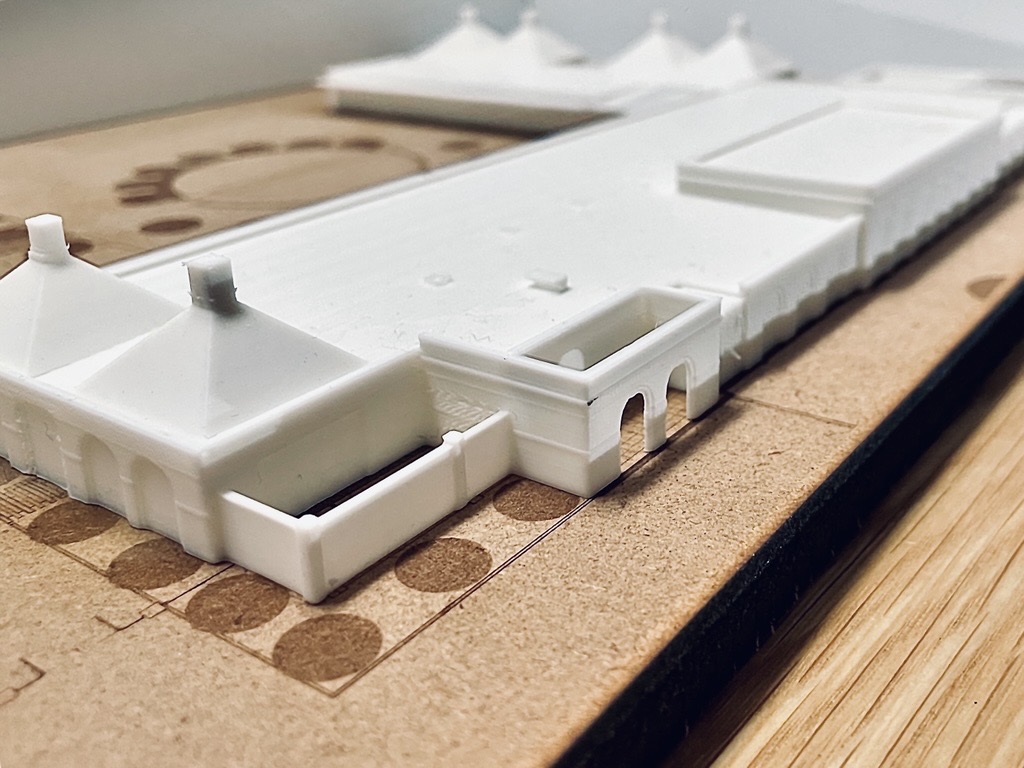

Full Street, Derby
This 3D model played a key role in advancing the project, providing the client with a clear and accessible visual tool to better understand the design and support informed discussion and decision-making.


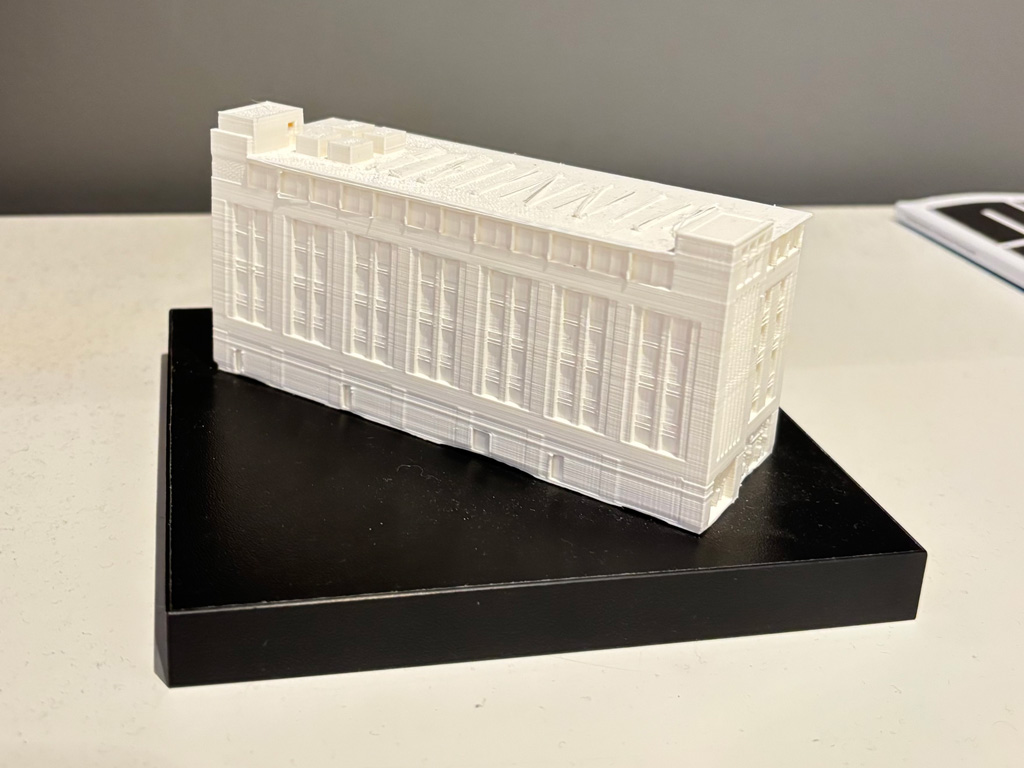
Stockport Scheme
This model helped to bring the design process into sharper focus, allowing key aspects of the scheme to be explored, reviewed, and refined as it evolved. By providing a shared point of reference, it supported productive conversations with the client and informed decisions at each stage of the project’s development.


Sustainability
Working with PLA, a bioplastic derived from corn starch and sugarcane, naturally raises questions around sustainability. As with any form of physical model making, mistakes happen, prints can fail, and many components require temporary supports that are removed once printing is complete.
At Franklin Ellis, sustainability is an important consideration in how we use these tools. While PLA is not conventionally recyclable through standard waste streams, we have invested in a specialist service that processes our printed waste, allowing it to be recycled and given new life. This helps us reduce unnecessary disposal and ensures that bringing ideas into the physical world is done as responsibly as possible.
Looking Ahead
For us, 3D printing is more than just another tool. It is a way of making ideas tangible and encouraging collaboration. This work also closely aligns with ongoing university research into 3D printing in architecture and construction, helping to inform how we continue to develop our approach.
As we refine how these tools are used, we are encouraging the whole office to explore their potential. We look forward to sharing more as new projects take shape and our use of physical models continues to evolve.